

The 2024 Guide to Professional Dental Tools
If you’ve ever felt a little uneasy in the dentist’s chair, you’re not alone. The array of sharp and unfamiliar instruments on the tray can leave you wondering what each tool does—and why it needs to go near your mouth. But once you understand what these dental tools are for, you’ll likely feel more at ease during your checkups. This guide will walk you through some of the most common dental tools you might encounter, as well as a few you may only see during special procedures.
1. Mouth Mirror
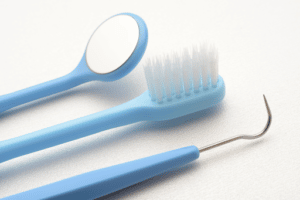
A mouth mirror is a small, round mirror attached to a metal handle, used by your dental hygienist or dentist to help see into areas of your mouth that are hard to reach. It reflects light onto your teeth, helping to get a clear view of your mouth’s health. It also makes it easier to move your cheek or tongue out of the way to access your teeth. While you may feel it between your cheek and teeth, it shouldn’t cause any pain or discomfort.

2. Dental Scalers
Dental scalers are used to remove plaque and tartar buildup from your teeth. Traditional manual scalers feature sharp hooks on both sides, which your dentist uses to scrape away stubborn buildup. Although it might cause some discomfort, especially if there’s significant tartar, the process helps keep your gums healthy.
Ultrasonic scalers are another option. They use ultrasonic vibrations to remove plaque, along with a stream of water that cools the device during the cleaning process. This option is more gentle and causes less discomfort than the traditional scraping method.

3. Suction Devices
As you sit back for your exam, saliva is naturally produced in your mouth. A suction device, such as the saliva ejector, removes this excess moisture to keep your mouth clean and dry. It’s a small, straw-like tube that quickly suctions up fluids and debris. While it can feel a bit uncomfortable, especially when it’s drying out your mouth, your hygienist will keep things balanced with a little water to keep you comfortable.

4. Sickle Probe
A sickle probe is a thin, sharp metal tool with a curved hook. Your dentist uses it to probe between your teeth and around your gums to check for cavities or tartar buildup. It can seem intimidating because of its sharp tip, but it rarely causes pain. If you have sensitive gums, you might experience some discomfort, but the process is quick and doesn’t usually hurt.
5. Spoon Excavator
This tool is designed to remove decayed tissue from teeth before filling a cavity. The spoon excavator has a rounded, scoop-like end, which your dentist uses to clean out decayed material. The procedure is usually painless because a local anesthetic will be applied beforehand to numb the area before the dentist works on your tooth.
6. Burnisher
Burnishers are used to smooth and polish fillings, such as those made of amalgam or composite materials. The rounded tips of burnishers help to smooth out rough edges and give your filling a natural, polished look. You’ll feel pressure on your tooth, but it should not be painful.

7. Polishers
After your dentist or hygienist removes plaque, a dental polisher is used to give your teeth a nice, smooth finish. The polisher uses a gritty, flavored paste that helps eliminate any remaining tartar and leaves your teeth looking bright and polished. The process might feel like a firm brushing but shouldn’t be uncomfortable.
8. Dental Drill
The dental drill is one of the most anxiety-inducing tools for many people, but it’s not as bad